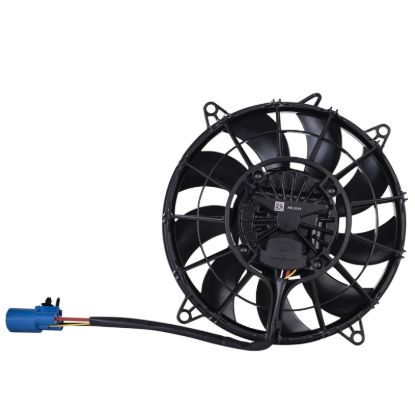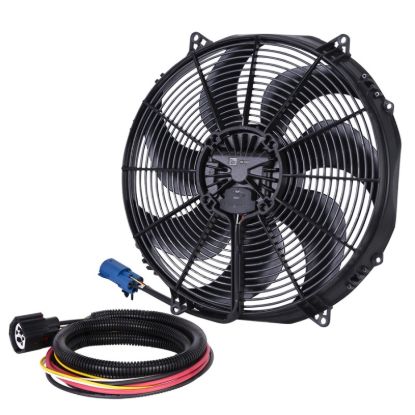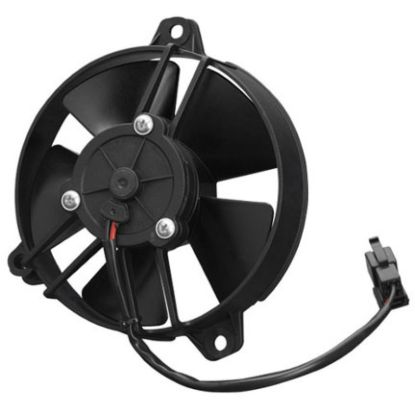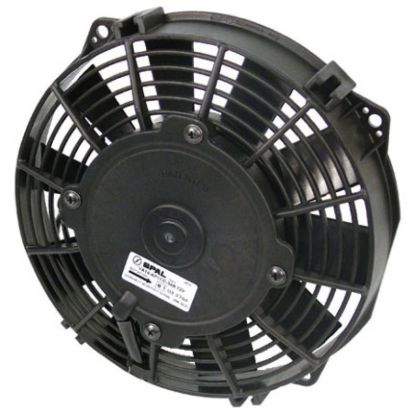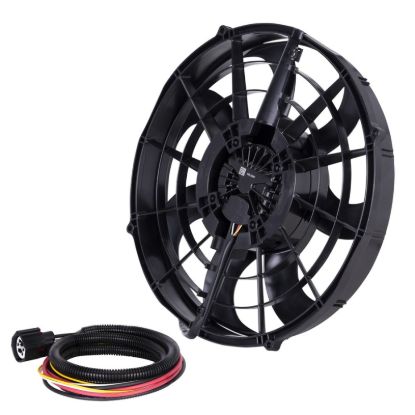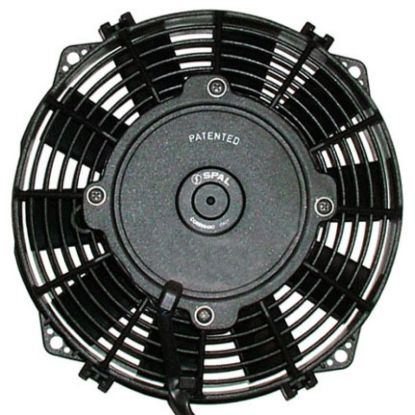

SPAL 2720 CFM 11in Dual High Performance Fan - Pull (2VA06-AP70/LL-37A)
spl30102052
SPAL 2720 CFM 11in Dual High Performance Fan - Pull (2VA06-AP70/LL-37A)
441,58 € excl. VAT
Does your temperature gauge climb in traffic or in the pits, even though it stays fine at high speed? Then it's typically the fan that needs to pull air through the radiator. Here we've gathered electric cooling fans, fan shrouds, controllers and fan blades for street cars and projects with extra heat load.
At high speed, the airflow from driving forces air through the radiator. In traffic, at idle and after a session on track, it's the fan that keeps the airflow going instead. An electric fan only runs when it's needed and can remove the mechanical load that a belt-driven fan puts on the engine. A fan shroud directs air across the entire radiator surface rather than just the area directly in front of the blades, which can give more even cooling.
Diameter alone doesn't determine cooling performance. Look at several factors together:
If you want to decide for yourself when the fan switches on, take a closer look at fan controllers.
The fan can only remove the heat the radiator is able to dissipate, so consider it together with the radiator and the rest of the system. Some kits combine shroud and fan, such as CSF shrouds with a SPAL fan, while others are mounted with brackets or clips. Check the dimensions of the radiator core before ordering, and regularly inspect connectors, relay and bearings, and make sure the blades are free of cracks.
A puller fan behind the radiator is typically the most efficient, because it doesn't block the airflow from driving in the same way. Pusher mounting in front can be necessary when space is limited. Check that the fan is available for the desired airflow direction.
It's often possible, but it requires space, a power supply with relay and fuse, and a controller that switches the fan on at the right temperature. The alternator must also be able to supply the extra current.
The cause can lie elsewhere in the cooling system, such as a clogged radiator, air in the system or a faulty thermostat or water pump. If a fan shroud is missing, the air can also bypass the radiator surface.
It switches the fan on and off based on coolant temperature, typically with an adjustable switch-on point. This can keep the temperature more stable than a fixed thermo switch and prevent the fan from running unnecessarily.